Description
Measure altitude, clearance and water depth.
Single-beam echosounder for underwater vehicles
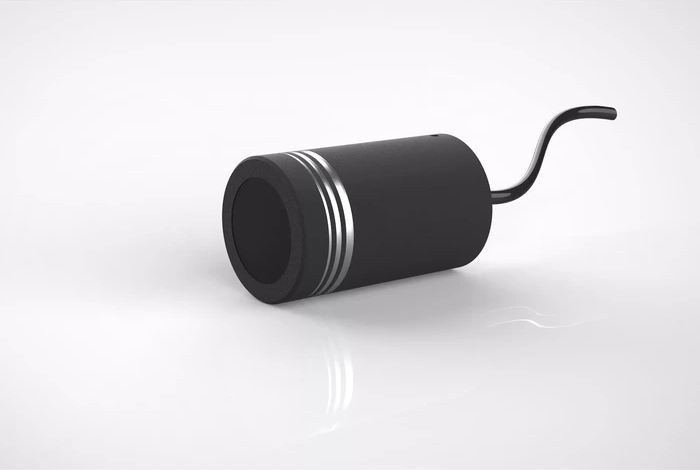
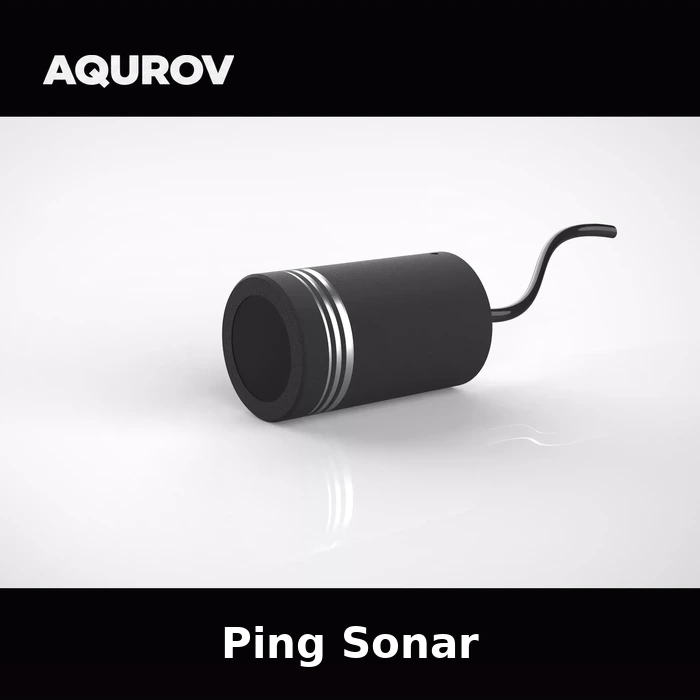
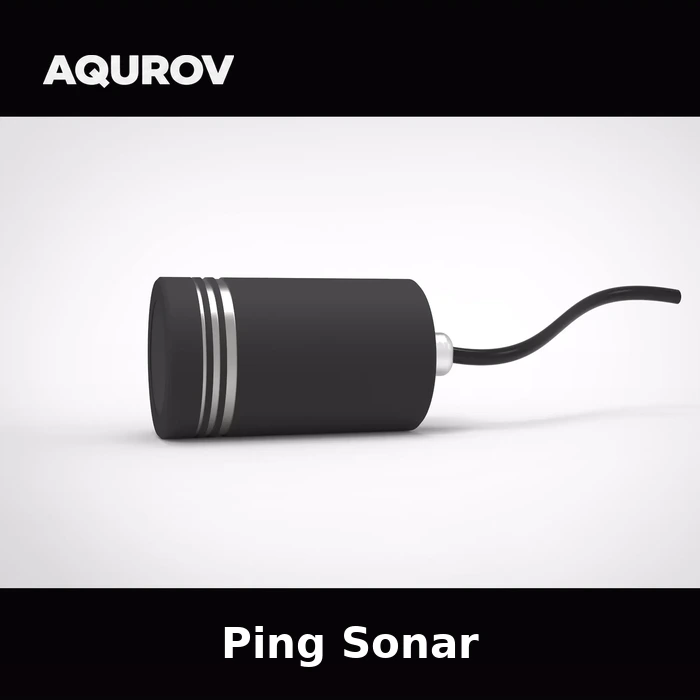
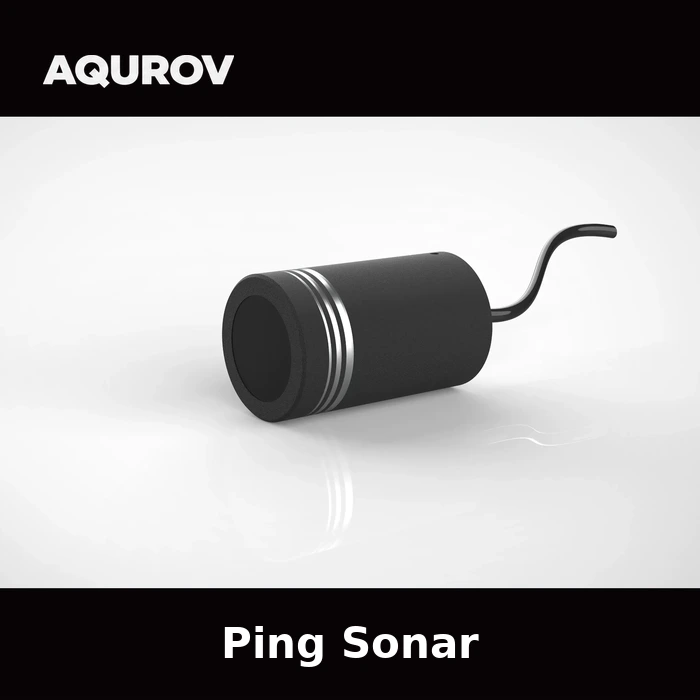
Ping Sonar sends an ultrasonic pulse into the water, listens for the return and measures the distance to the strongest echo. The reflector may be the seabed or a large object within the beam.
A compact design and short 20 cm minimum range make it useful for vehicle ranging, from close clearance checks to longer-distance measurements.
- 01ROV & AUV altimetryMeasure the distance to the seabed along the direction the sonar is mounted.
- 02USV depth soundingUse the echo distance for water-depth measurements beneath a surface vehicle.
- 03Obstacle rangingMeasure distance to reflecting objects in the beam as an input to a vehicle system.
Single-beam distance and echo response.
200 kHz acoustics · 14° beamwidth
Send an ultrasonic pulse
The piezoelectric transducer sends a pulse into the water along the acoustic beam.
Listen for the echo
The sonar listens for returning reflections from the seabed or other objects.
Read distance and echo strength
The output includes distance to the strongest echo and the full echo response: echo intensity versus time.
Power and connection
Separate 5 V communication and 12 V power circuits
Power & serial interface
Separate supplies: communication +5 V and power stage +12 V.
External 12 V DC source: rated at least 1.5 A.
- Recommended: 100–470 µF capacitor across the external power output.
- Use the designated power and communication GND leads; do not interchange them.
- Connect communication first, then the 12 V power stage.
See the separate user manual and device wiring document for lead identification and connection details.
Technical specifications
Acoustic, power and communication ratings
| Sonar type | Single-beam echosounder |
|---|---|
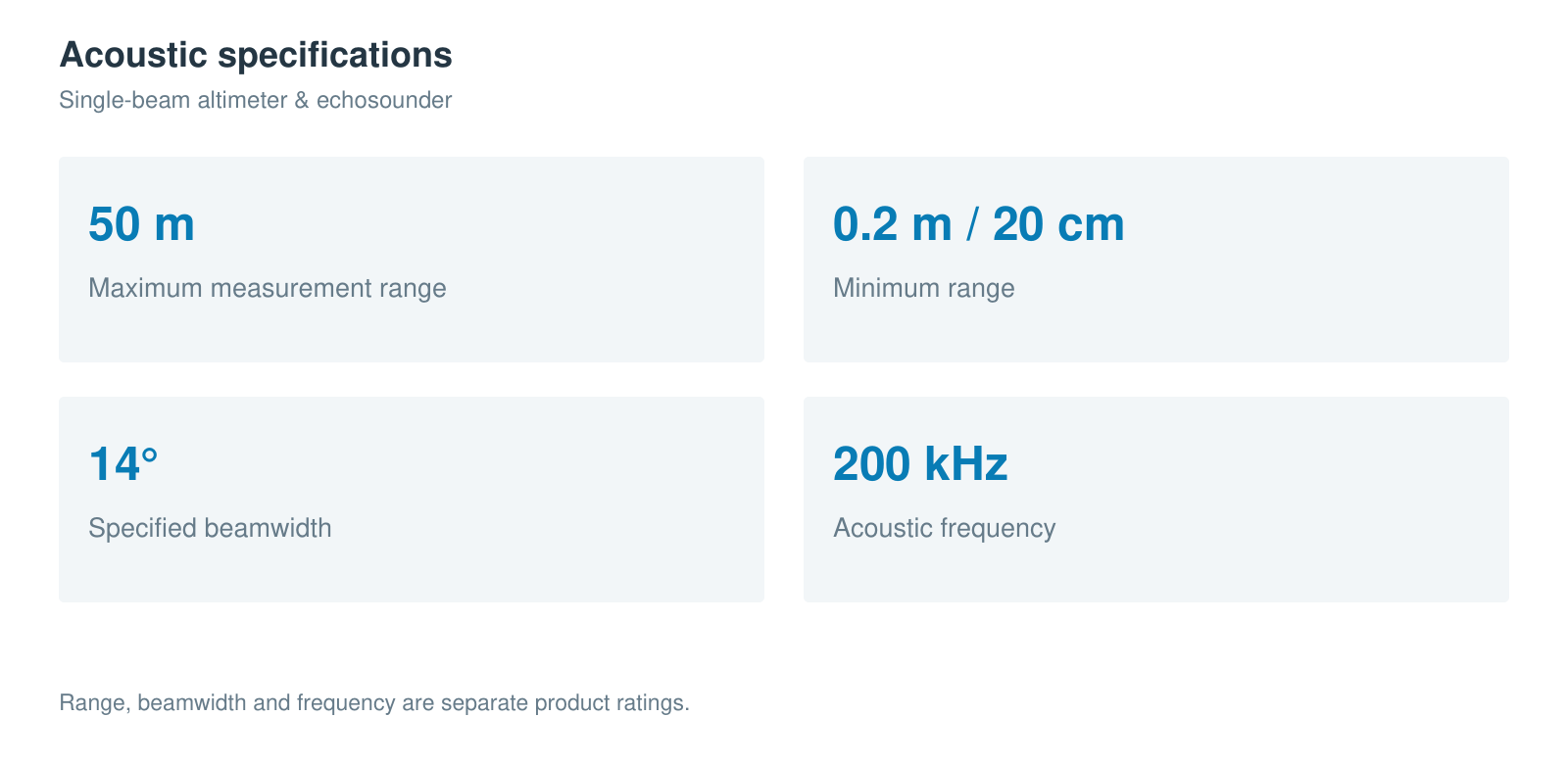
| Maximum measurement range | 50 m |
| Minimum range / blind distance | 0.2 m / 20 cm |
| Depth rating | 300 m |
| Beamwidth | 14° |
| Acoustic frequency | 200 kHz |
| Range resolution | 10 cm at 30 m |
| Output information | Strongest-echo distance and full echo response |
| Communication supply | 5 V |
|---|---|
| Communication current | 150 mA at 5 V |
| Power-stage supply | 12 V |
| Power-stage current | 1 A maximum at 12 V |
| External 12 V supply capacity | At least 1.5 A |
| TTL logic level | 3.3 V |
| Communication interface | TTL Serial |
| Baud rate | 115200 |
Range resolution is the stated 10 cm at 30 m, not an accuracy guarantee. Longer transmit pulses increase the blind zone; choose pulse settings for the required clearance. Maximum measurement range and operating depth are separate ratings.
Dimensions and rear mounting
Millimetres · high-resolution drawing views
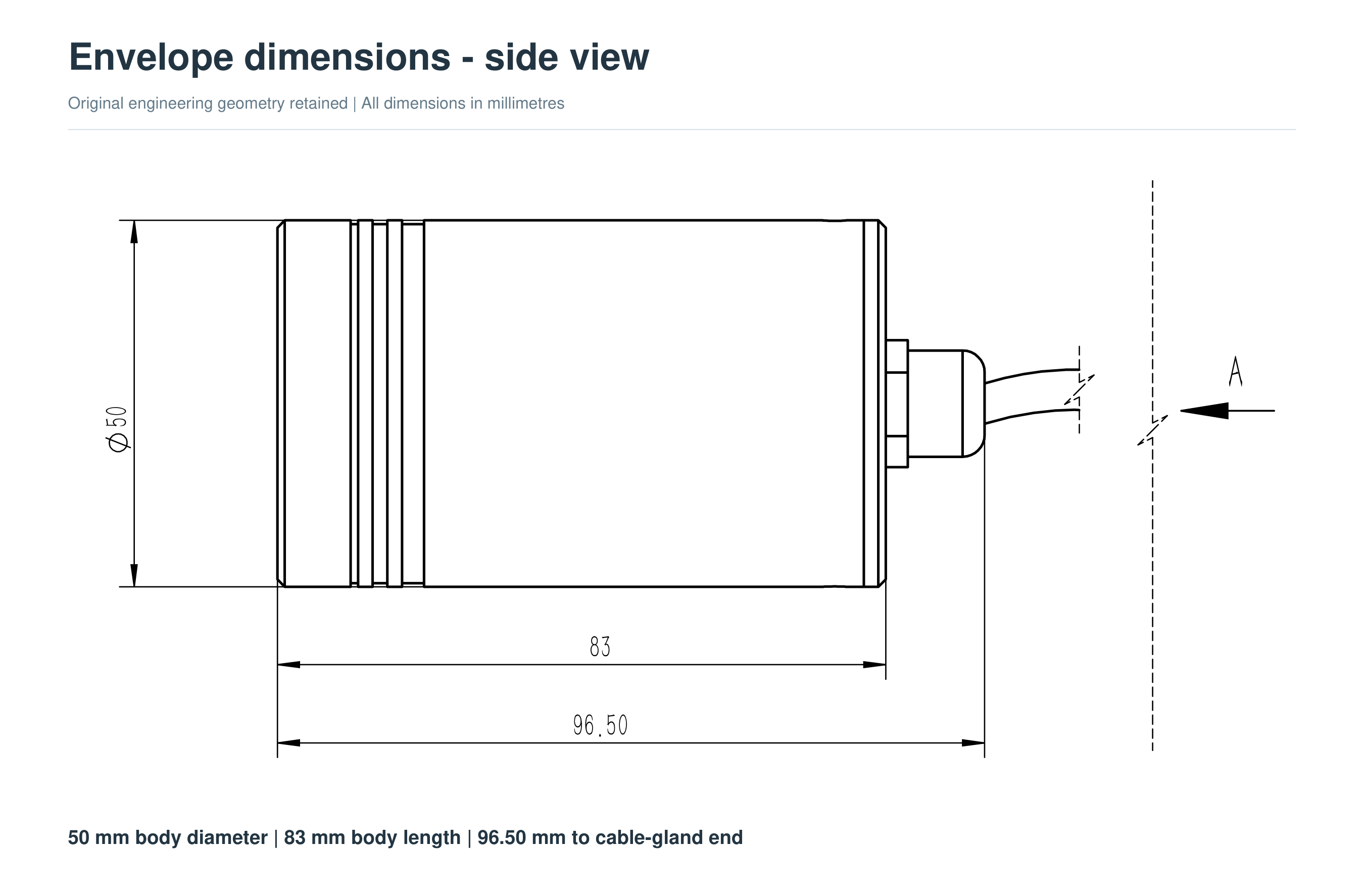
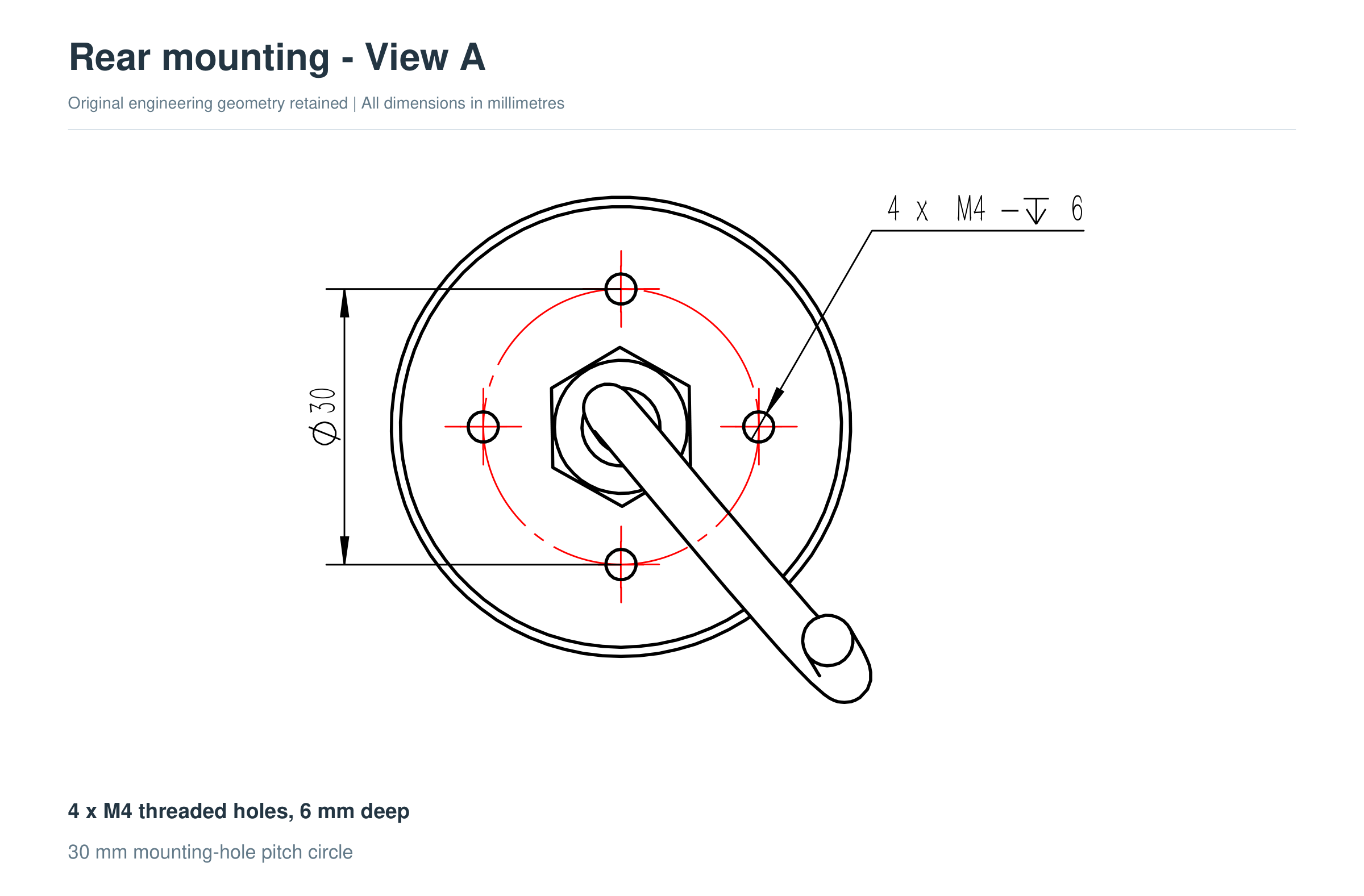
Check the mounting envelope.
Use the rear-face hole pattern and side-view dimensions to plan the mount and allow room for the cable outlet.
| Body diameter | Ø50 mm |
|---|---|
| Body length | 83 mm |
| Length to cable-gland end | 96.50 mm |
| Rear mounting holes | 4 × M4 |
| Thread depth | 6 mm |
| Mounting-hole pitch circle | Ø30 mm |
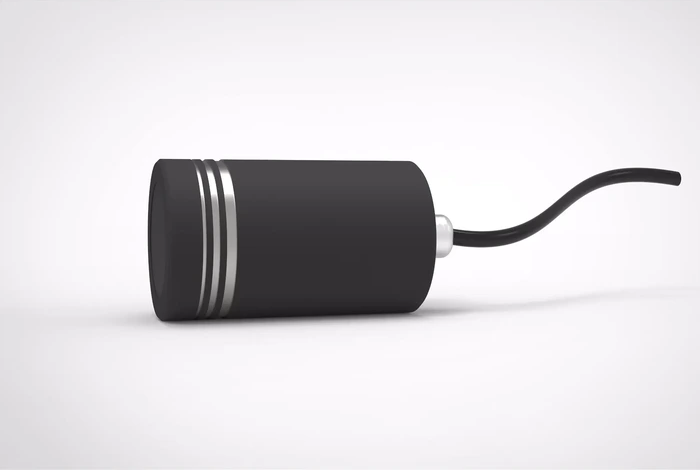
Plan the integration.
- Choose the measurement direction for altitude, depth or obstacle ranging.
- Keep the acoustic face clear of the vehicle frame and other obstructions.
- Match the rear mounting pattern and leave space for the cable.
- Connect power and TTL serial using the device-specific pinout.
Downloads
Separate user manual and engineering reference
Selection & integration FAQ
What does the 300 m rating mean?
It is the depth rating of the sonar. The maximum underwater measurement range is 50 m; depth rating and ranging distance are separate specifications.
Is this a scanning imaging sonar?
This is a single-beam echosounder. It measures distance and echo response along the direction in which it is mounted. A 360° mechanical scanning function is not part of the listed specification.
What is the minimum measurement distance?
The confirmed minimum range is 0.2 m (20 cm). Longer transmit pulse settings increase the blind zone; allow for this when setting up close-range measurements.
What data does it provide?
It provides the distance to the strongest returning echo and the full echo response, describing echo intensity versus time.
Can I connect it directly to USB?
The native communication interface is TTL Serial at a 3.3 V logic level. For a USB host, use a compatible USB-to-TTL serial adapter and the correct device wiring.
Does an RS485 adapter recommendation mean it has native RS485?
The listed native interface is TTL Serial. Adapter recommendations do not establish a native RS485 port or its pinout.
Which vehicle applications are described?
The product is intended for ROV and AUV altitude measurement, USV depth sounding, obstacle ranging and other underwater distance measurements. Integration with a specific vehicle or software system must be verified separately.
What power supplies are required?
Use 5 V for communication and independent 12 V for the power stage. The external 12 V supply must be rated for at least 1.5 A. The listed circuit currents are 150 mA at 5 V and 1 A maximum at 12 V.
Reviews
There are no reviews yet.